Everything a new off-roader and overlander needs to start exploring — rigs, gear, route planning, and trail etiquette from the Rodeo Overland crew.
The Rodeo Overland Guide to Off-Roading & Overlanding
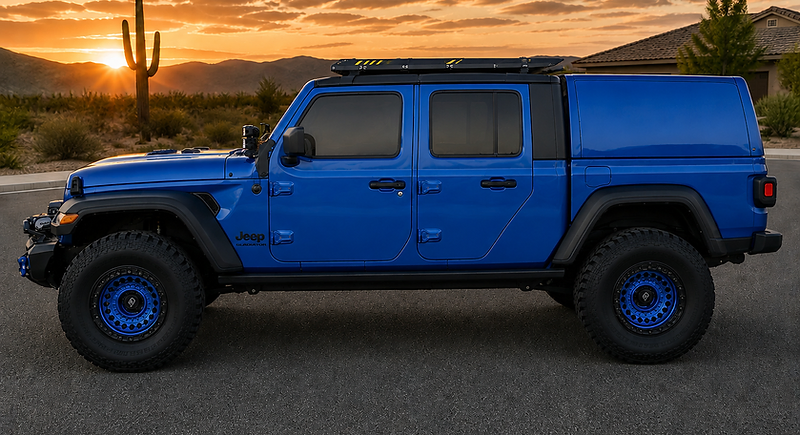
New to off-roading or planning your first multi-day overland trip? This guide breaks down the rigs, the recovery gear, the route-planning basics, and the trail etiquette that keep the adventure fun and safe. Whether you drive a stock Jeep Wrangler or a fully built Gladiator with a roof-top tent, the fundamentals are the same — prepare your vehicle, know your route, respect the land, and push your limits, Rodeo style.
What Is Overlanding?
Overlanding is self-reliant adventure travel to remote destinations where the journey is the primary goal. Unlike a weekend camping trip or a quick trail run, overlanding blends off-road driving, backcountry camping, and long-distance exploration into a single sustained experience. It is less about conquering the hardest obstacle and more about covering ground, staying out for days or weeks at a stretch, and learning to live comfortably off the grid. For most overlanders the vehicle is both transportation and home — a platform you build up, sleep in, cook from, and rely on when the pavement ends and cell service drops out.
Choosing the Right Rig
Your rig is the foundation of every overland trip. Midsize trucks like the Jeep Gladiator, Toyota Tacoma, and Ford Ranger are popular because they balance payload, trail width, and fuel range. Full-size rigs like the Ram Power Wagon offer serious towing and payload but give up tight-trail maneuverability. SUVs such as the 4Runner, Bronco, and Land Cruiser remain favorites for their enclosed cargo space and proven drivetrains. Whatever platform you choose, prioritize four-wheel drive with a low-range transfer case, adequate ground clearance, all-terrain or mud-terrain tires, and a recovery point at each end of the vehicle. Build for reliability first and looks second — a broken rig two days from pavement is no fun.
Essential Recovery & Camping Gear
A basic overland kit starts with recovery gear: kinetic recovery rope, soft shackles, a tire repair kit, a portable air compressor, traction boards, and a properly rated jack. Add a shovel, a first-aid kit sized to your group, and enough water for every person plus a reserve. For camping, a roof-top tent or quality ground tent, a dual-battery or portable power station, a fridge or high-end cooler, and a simple camp kitchen cover most needs. Layer your gear so the things you reach for daily are accessible and the emergency items are secured but ready. Weight matters — every pound you add changes how your rig handles on the trail.
Planning Your First Route
Start small and close to home. Pick a two- or three-day loop you can bail out of if something goes wrong, and drive it before you build out the rig so you learn what your vehicle actually needs. Use a mapping tool like onX Offroad or Gaia GPS to pre-load tracks, mark fuel stops, and identify campsites with cell coverage as a fallback. File a trip plan with someone at home — your route, your expected return, and who to call if you are overdue. Respect seasonal closures and fire restrictions, stay on designated routes, and practice Leave No Trace so the trails stay open for the next group.
Trail Etiquette & Safety
Good trail etiquette keeps access open and keeps people safe. Yield to uphill traffic, give equestrians and hikers plenty of room, and never cut switchbacks or widen the trail. Pack out everything you pack in, including micro-trash. On the trail, communicate with your group by radio, keep visual contact with the rig behind you, and stop at every intersection to confirm direction. Carry a satellite messenger for trips outside cell range, and know how to use your recovery gear before you need it. The best overlanders are the ones who arrive back at camp tired, dirty, and unhurt.